Kane Parsons’ feature debut with Backrooms takes one of the internet’s most recognizable horror concepts and gives it enough structure to work as a feature film without making it feel overly polished.
The story follows Clark, played by Chiwetel Ejiofor, a character whose entry into the Backrooms gradually becomes more than a simple case of survival. As he moves through its endless rooms and disorienting corridors, the film begins to frame the space not only as a trap, but as a place that reflects something fractured and unresolved within him.
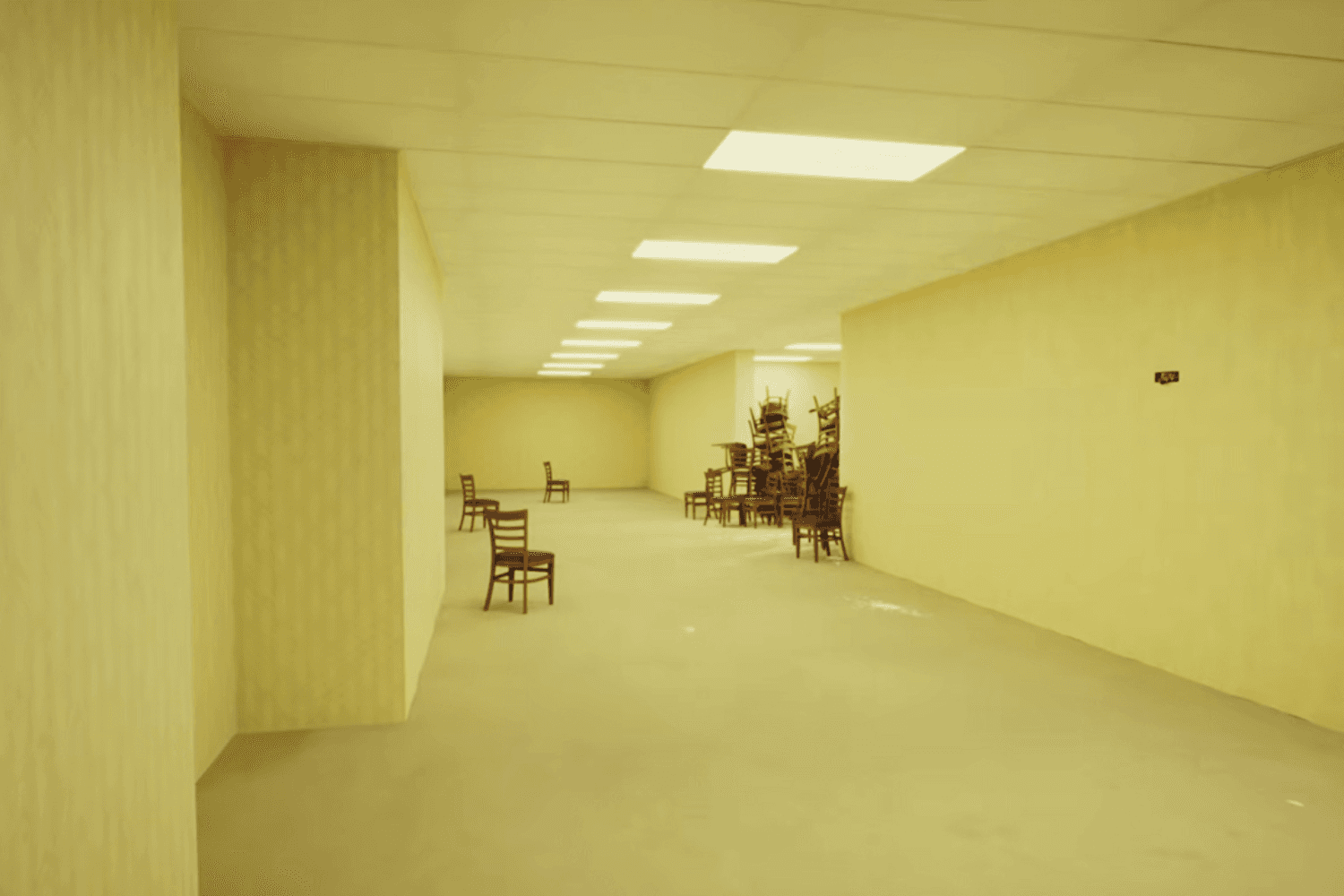
The premise was simple, but effective: a person slips out of normal reality and lands in an endless maze of yellow walls, stale carpet, harsh lighting, and empty rooms that seem familiar without belonging to any specific place. Parsons keeps that visual language intact while giving the story a clearer psychological shape.
Horror Built Through Space
Credit: Cinemablend
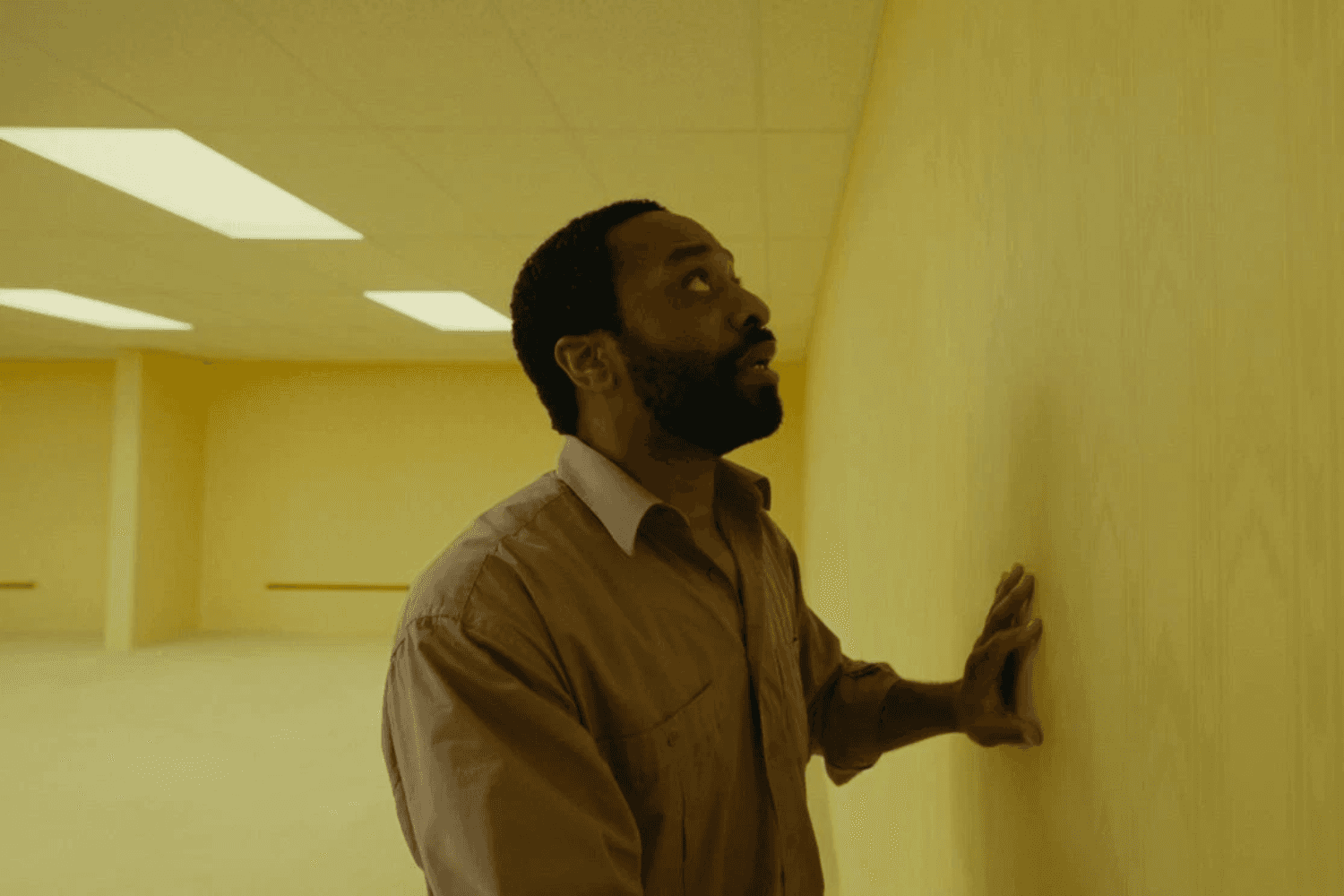
The strongest parts of Backrooms allow the environment to control the mood. The film slows down and lets the viewer take in the layout of a hallway, the repetition of the walls, and the strange emptiness of a room that appears to have no reason to exist. Rather than relying on constant jump scares, it builds tension through the feeling of being trapped inside a place that follows rules no one has explained.
This approach gives the film a distinct identity. The horror does not depend on darkness or gore, although the story has room for danger, because its real pressure comes from design. The fluorescent lighting, the flat color palette, the institutional blandness, and the constant sense of artificial space all work together to create a setting that feels both ordinary and unusable. A hallway should guide someone somewhere, while a room should naturally have purpose.
In Backrooms, those basic expectations gradually break down, and the film draws much of its fear from that collapse.
The result is a kind of architectural horror. The space becomes more than a backdrop because it shapes how the characters think, move, and react. Every turn carries the possibility of deeper disorientation, and even familiar-looking rooms become difficult to trust. The film’s best moments come from that quiet shift, when a place that looks boring begins to feel actively hostile.
Why the Concept Works So Well as an Adaptation
Adapting internet horror is difficult because online myths often work best when they remain fragmented. Creepypasta and analog horror tend to gain power through partial information, low-resolution images, contradictory lore, and the feeling that the audience has stumbled onto something they were not meant to fully understand.
On the other hand, a feature film has different demands. It needs characters, pacing, conflict, and some narrative direction, all of which can weaken a concept that originally thrived on mystery.
Backrooms handles this problem better than expected. The film gives the story enough shape to sustain a movie, but it generally avoids turning the Backrooms into a fully explained puzzle box. There are moments where the mythology edges toward overclarification, especially when the plot has to move the characters from one discovery to the next.
Still, Parsons usually keeps the focus where it belongs: on the experience of being inside the space.
Credit: Seattle Refined
The Fear of Familiarity
What makes Backrooms feel current is its connection to a very modern kind of discomfort. Contemporary life is full of temporary, impersonal spaces such as airports, lobbies, chain stores, rental units, parking garages, office buildings, and waiting areas designed for passing through.
These places are not memorable in any meaningful way, but they still take up space in people’s minds. They become part of the visual background of daily life.
The film uses that background effectively. It takes the dullness of those spaces and pushes it into horror without making the setting feel too stylized. The Backrooms resemble the kinds of places people barely notice until something feels off, which is one of the movie’s better choices. It allows the viewer to bring their own associations into the space, which makes the fear feel less like a fictional invention and more like an exaggeration of something already familiar.
Because of that, the film’s atmosphere often carries more weight than its plot mechanics. The characters matter, but the movie’s most lasting impression comes from the way it turns ordinary design into a source of anxiety. By the time the story fully settles into the Backrooms, the viewer has been trained to look at every hallway and room with suspicion.
The Backrooms as a Distorted Memory
One of the more interesting ideas in Backrooms is that the space also functions as and resembles a distorted memory, built from pieces of familiar environments and people that have lost their original meaning.
That gives the film more emotional texture. The Backrooms are frightening not only because they separate people from the real world, but also because they reflect how memory can become unreliable when filtered through fear, grief, or avoidance. While the space may physically trap people, it does a better job of unsettling their sense of what belongs to them.
Credit: KinoCheck
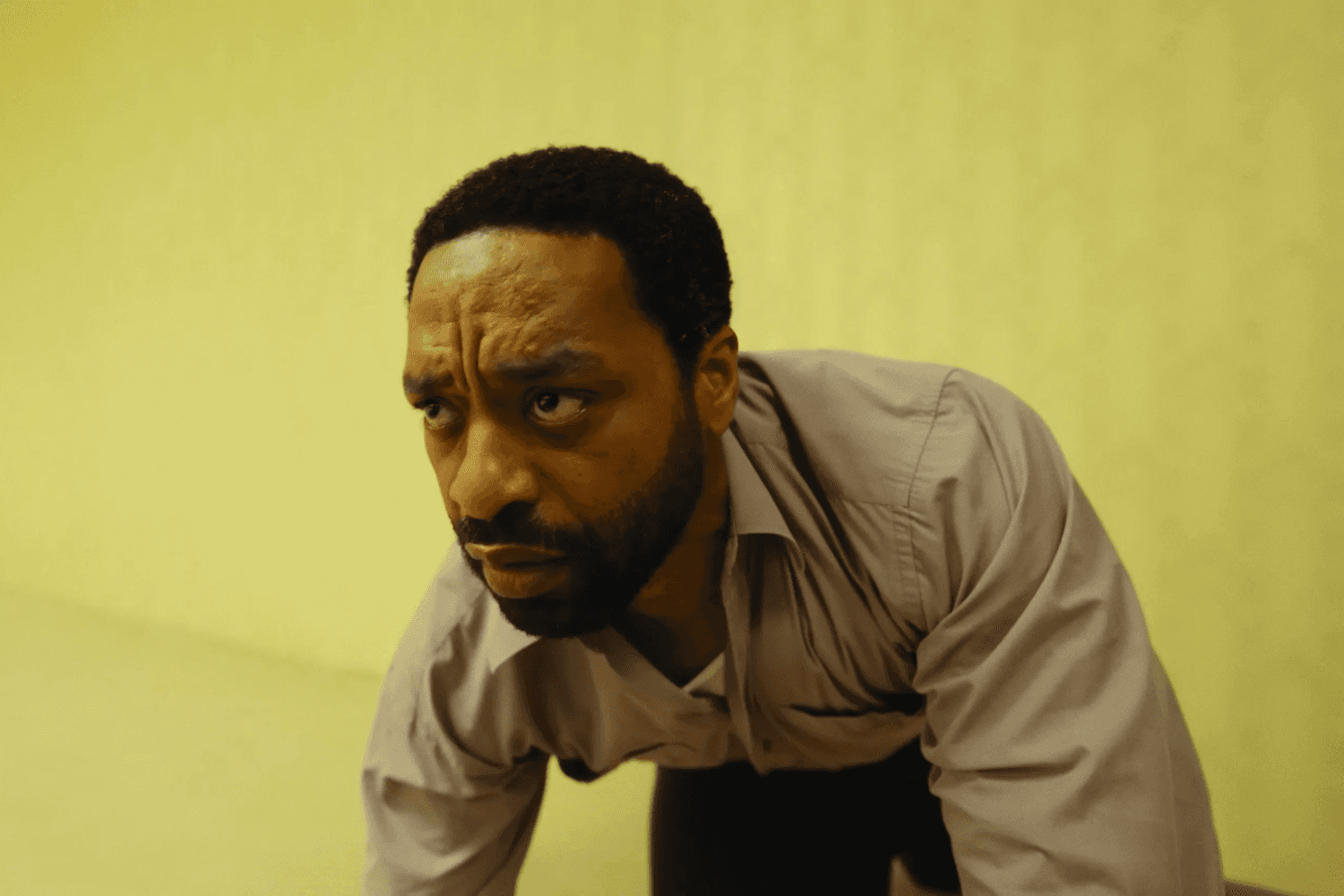
Clark’s relationship to the Backrooms strengthens that idea. For other characters, the space primarily represents disorientation and danger. Clark responds to it differently by recognizing something in its broken logic, as though the distorted rooms match a part of him that the ordinary world cannot accommodate. His connection to the Backrooms gives the film a more complicated emotional center because his fear is mixed with a sense of belonging.
Clark: … I don't think I want to change.
Mary: Then don't.
Clark: I like it in here. For the first time in a long time, I feel like I'm … like I'm right where I'm supposed to be.
That is Clark's refusal to return to the real world has weight. His choice suggests that the Backrooms offer him a form of stability, even if that stability is damaged and unnatural. The outside world asks him to continue, adjust, recover, and participate in a reality that no longer feels possible for him. Inside the Backrooms, he can remain with the shameful, embarrassed, and messed-up version of himself that already feels suspended.
The film becomes more compelling when viewed through that lens. The Backrooms are dangerous, but they are also emotionally seductive because they preserve certain feelings instead of resolving them. Regret, fear, grief, and attachment can remain fixed there, repeating in altered forms. Much like Clark’s attachment to the space, people do not always cling to what is healthy or safe, but instead to what feels recognizable or enabling.