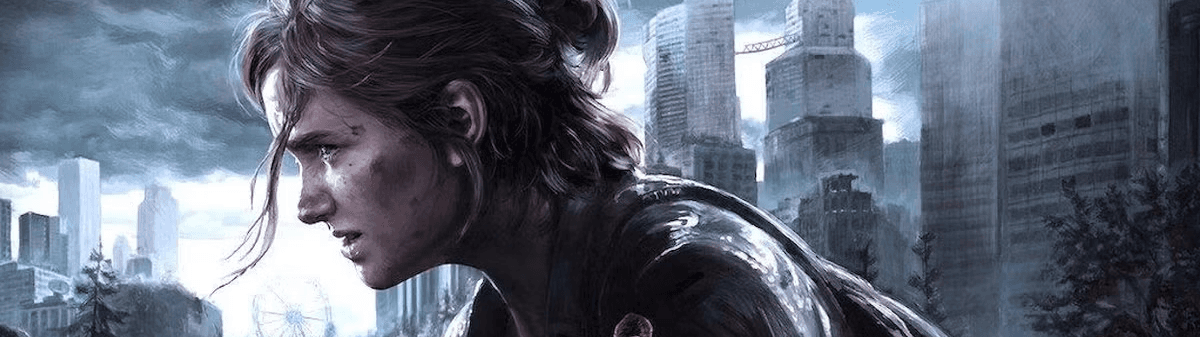
For a story set after the end of the world, The Last of Us is remarkably uninterested in brutality as empty spectacle.
It contains all the right markers of prestige apocalypse gaming, such as infected bodies, ruined cities, militias, and the constant possibility of sudden death. Yet what makes its violence feel so distinct is that it rarely plays as distant action — it plays as contact.
In The Last of Us, brutality is framed as something unusually intimate, something that collapses the distance between protection and possession, love and control, fear and tenderness. In many action games, violence serves a clear mechanical purpose. The Last of Us pushes against that abstraction by making each encounter feel tense, ugly, and claustrophobic.
That effect ties brutality closely to human attachment and the desire for belonging. Violence in The Last of Us is woven into the ways characters protect, avenge, control, and cling to one another, especially once grief and fear begin to override judgment.
Over time, brutality becomes inseparable from the relationships at the center of the story, shaped by love under pressure and by grief that demands somewhere to go.
The Last of Us: Part I
Part I initially establishes this logic through Joel, whose violence matters because it is so inseparable from loss. Plenty of apocalyptic game protagonists are violent, but Joel’s brutality carries a particular emotional weight.
After his daughter Sarah’s death, Joel’s inner life hardens around survival, avoidance, and the refusal to care too openly. By the time he meets Ellie, violence is already part of the structure through which he moves through the world, allowing him not only to survive, but to keep distance, maintain control, and protect himself from the vulnerability that love once made catastrophic. As his bond with Ellie deepens, that same violence takes on a more personal meaning, as he begins fighting to keep this one specific person from being taken away.
Joel’s combat never feels emotionally neutral because every act of brutality gathers more meaning as Ellie becomes central to his life. What might once have registered as ordinary survival increasingly carries the force of protectiveness and dread.
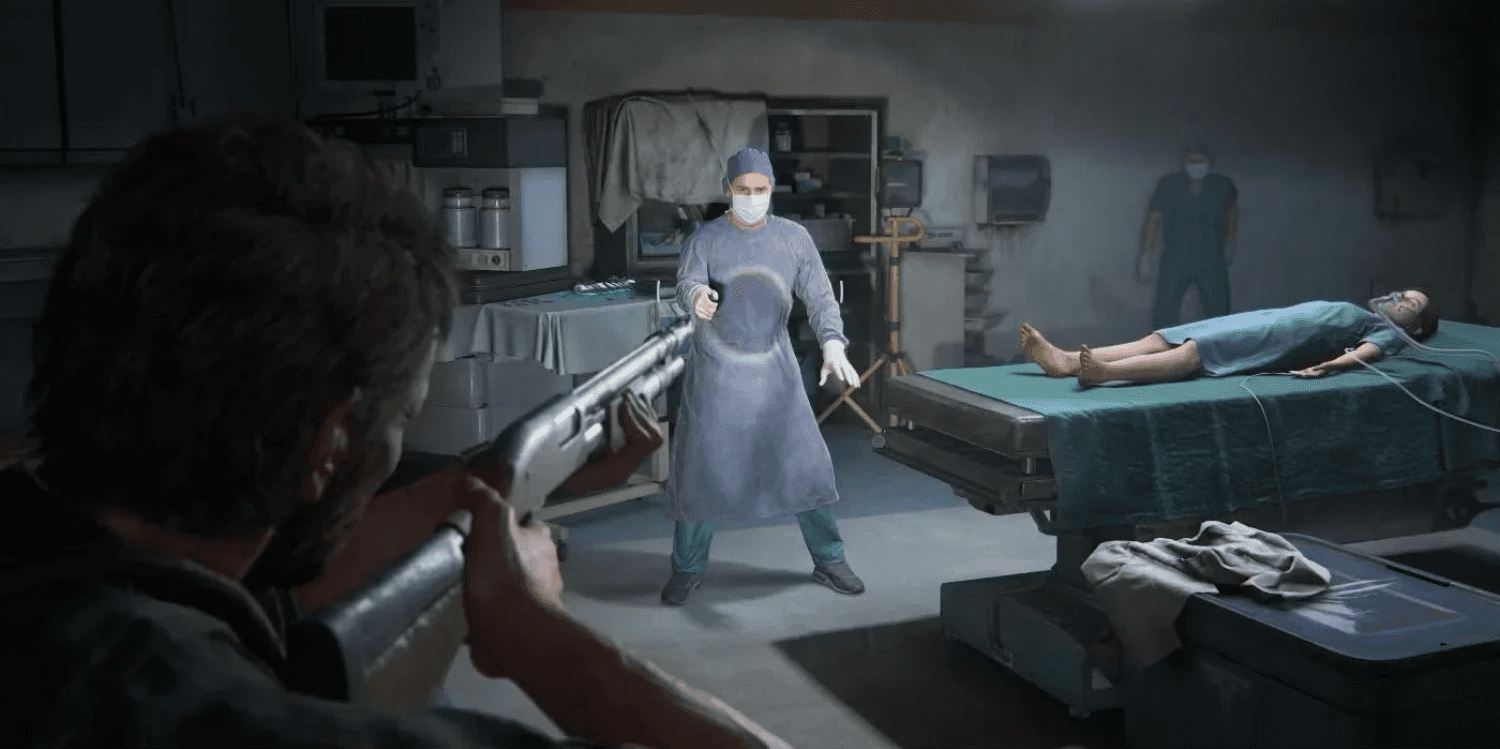
By the time Part I reaches the hospital climax, the violence no longer feels like the natural escalation of an action plot, but the fullest possible expression of Joel’s attachment, with his world narrowed so completely around Ellie that her survival outweighs any abstract moral good (i.e., save the world, or save your world).
Credit: @chilaquillover in r/thelastofus on Reddit
What makes the Part I ending so powerful is the way the game refuses to let the player stand at a comfortable distance from it. In another medium, such as television, a viewer might be allowed more moral separation from Joel’s choices, but in the game, the player has to act. The hospital sequence requires the player to carry those actions out alongside him, which makes the brutality feel not only mechanical but also narrative. The player becomes implicated in violence that is, while emotionally legible, ethically horrifying.
The Last of Us: Part II
This is where Part II became both brilliant and punishing. The game turns Joel’s violence outward and traces the damage it leaves behind in other lives, especially Ellie's. Revenge is rooted in names, bodies, memories, and grief that refuses to stay on one side of the story.
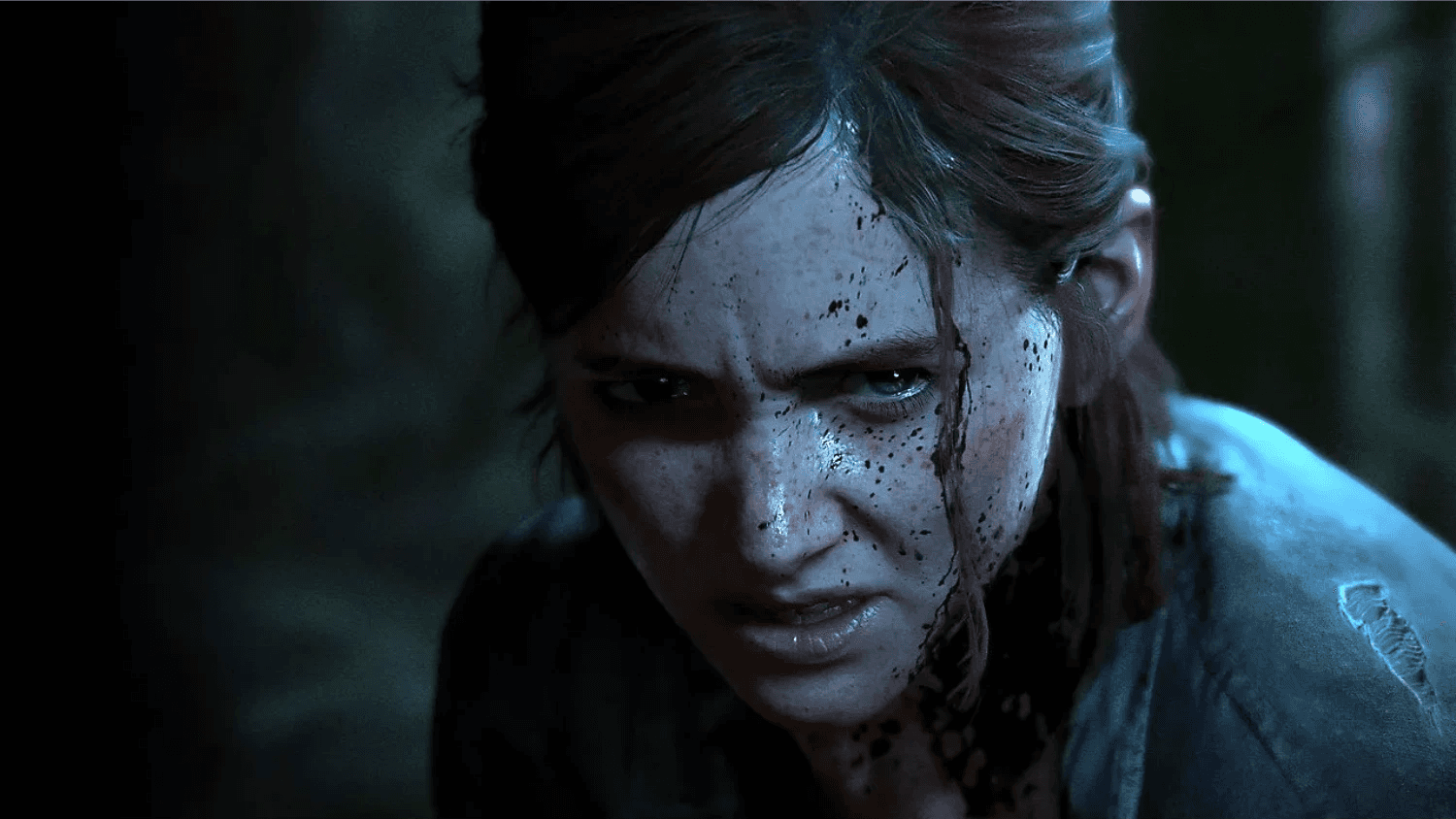
Ellie’s campaign is devastating because the game portrays her revenge as one of intimacy’s most distorted forms. She is driven not only by distance from Joel, but by closeness to him. Her violence feels personal because she is moving through the fact of Joel’s absence, trying to force that loss into some kind of meaningful answer through other bodies.
The game does a phenomenal job of keeping the player inside that logic for hours. It's not asking whether violence is wrong in the abstract, but rather asking how it feels to keep choosing it when it has become the only remaining connection to the person you lost.
Credit: IGN
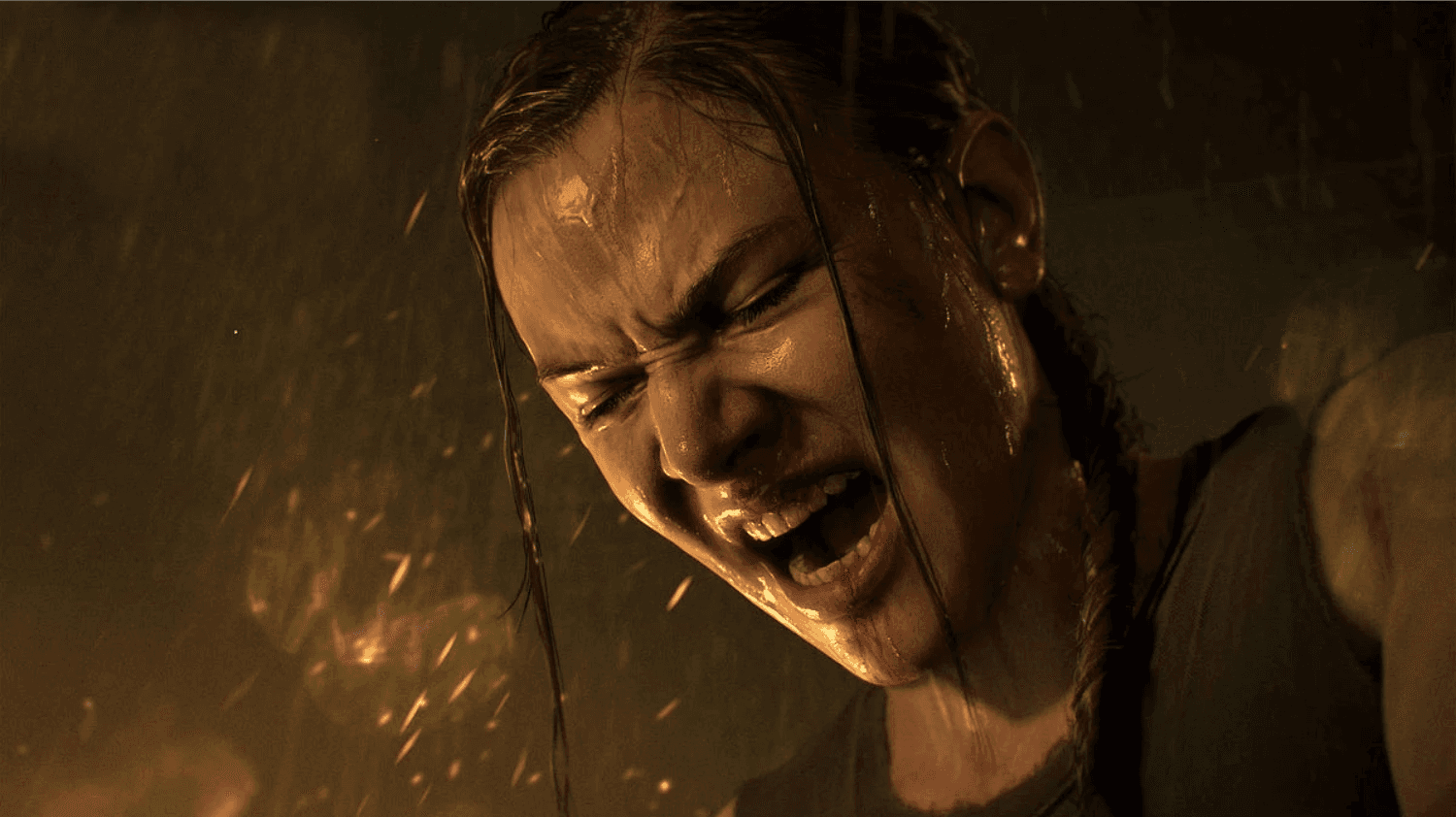
In a similar vein, Abby’s campaign makes that dynamic even more unsettling. Although it received criticism, the game rebuilds the world from her side so that her attachments, loyalties, and grief feel just as human and immediate as Ellie’s.
This abrupt shift gives Part II so much of its force. Brutality feels intimate to everyone inside it because all acts of revenge emerge from a life that sees itself as central, wounded, and bound to others through love.
Credit: Medium
Especially in Part II, the violence feels raw and rigid because love is never treated as automatically redemptive. Joel’s love for Ellie allows him to care again, but it also becomes the justification through which he takes control of her fate. Ellie’s love for Joel binds her to memory, tenderness, and guilt, yet it also pulls her deeper into a cycle of violence that steadily strips her of herself.
Abby’s love for her father, and later for Lev, reshapes her story in a similar way. At first, love gives revenge a purpose. Later, it gives her a reason to imagine something beyond it.
A Clear Nexus Between Violence and Love
Violence in The Last of Us feels personal, invasive, and exhausting. The game understands how love can save a person, but it is equally compelled to show how it can narrow a person’s world. Grief begins to demand evidence. Loss begins to demand action. To keep loving the dead, Ellie and Abby convince themselves they must make someone answer for what was taken from them.
In that sense, violence becomes a way of performing grief. It gives pain a shape, a direction, and a target. But the game never lets that performance feel triumphant. Each act of revenge leaves something behind, and each attempt to preserve love through violence only exposes how much of that love has already been distorted.
Ellie and Abby are not simple opposites. Their stories mirror and complicate each other, showing how easily grief can turn love into obligation, obsession, or punishment. By forcing the player to inhabit both perspectives, Part II makes brutality difficult to condemn from a distance. Its violence is disturbing not because it is senseless, but because the emotions behind it are painfully recognizable.