For a show that spent nearly a decade world-building, Stranger Things was at its best when its concerns felt more recognizably human. Before it became an international franchise packed with sprawling D&D mythology, military conspiracies, and a steadily expanding cast, it began with four young boys in a basement who were, at least to us, the heart of the story.
Mike, Will, Lucas, and Dustin were distinct characters from the beginning. As lovable as these boys already were, Stranger Things ultimately worked because they felt like children on the edge of becoming fully developed characters — still raw enough to take everything personally, and still naive enough to believe that loyalty could keep their inner worlds intact.
Stranger Things understood adolescence as a period defined by extremity, because at that age, everything feels comedically catastrophic. Friendship feels total until it suddenly does not, love feels permanent until it becomes humiliating, and identity is experienced less as a settled fact than as a constant emergency.
When the series was written from inside that emotional logic, it achieved a precise level of character development that many of its later coming-of-age storylines could not quite sustain. As the boys inevitably grew older throughout the seasons, the show rarely gave them the same layered interiority it once did as children, and that gap only became harder to ignore as the series moved forward.
The Original Quartet
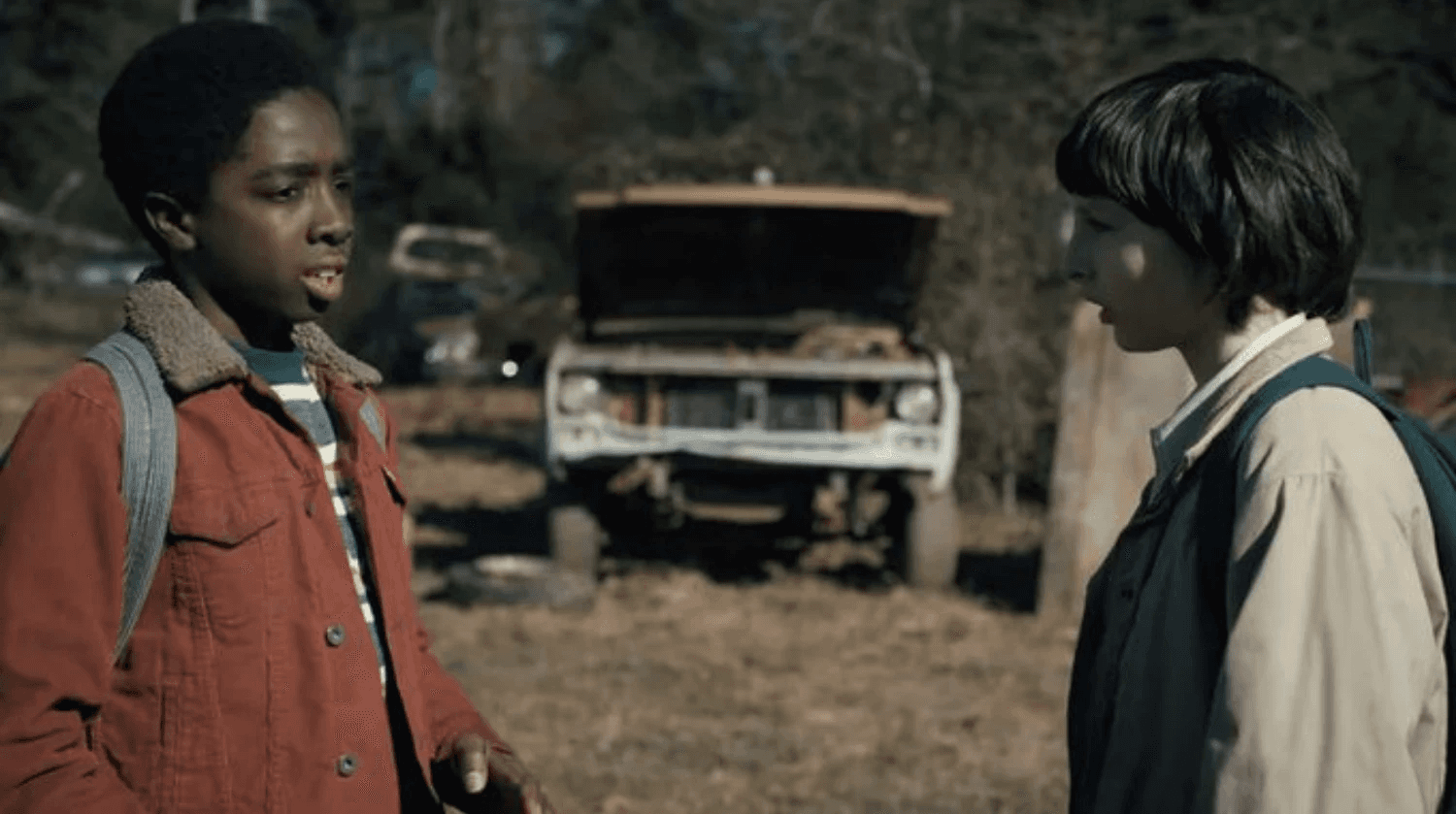
Part of what made the first season so beloved was how carefully and thoughtfully it built the original quartet. Mike was the one most willing to leap emotionally before thinking through the consequences, bringing El into the group because he instinctively responded to her vulnerability and because, almost selfishly, he believed she could help them find Will.
Meanwhile, Lucas resisted, questioned, and pushed back, which gave the group friction rather than easy sentimentality. Dustin mediated and kept things from collapsing under the weight of fear. And Will, though absent for much of that first season, remained sharply present through the shape of everyone else’s grief. His disappearance revealed who these boys were by showing what his absence did to them.
The early seasons grasped that adolescent friendship is both intensely communal and deeply unstable. These boys clearly loved each other, but they were also one injury away from feeling abandoned… all the time.
The show recognized that children do not experience conflict as a manageable disagreement, but as a referendum on whether they matter. All of this worked because the show treated young feelings seriously, as real feelings, and not merely as rehearsal for adulthood.
Credit: @SThingsMeme on X
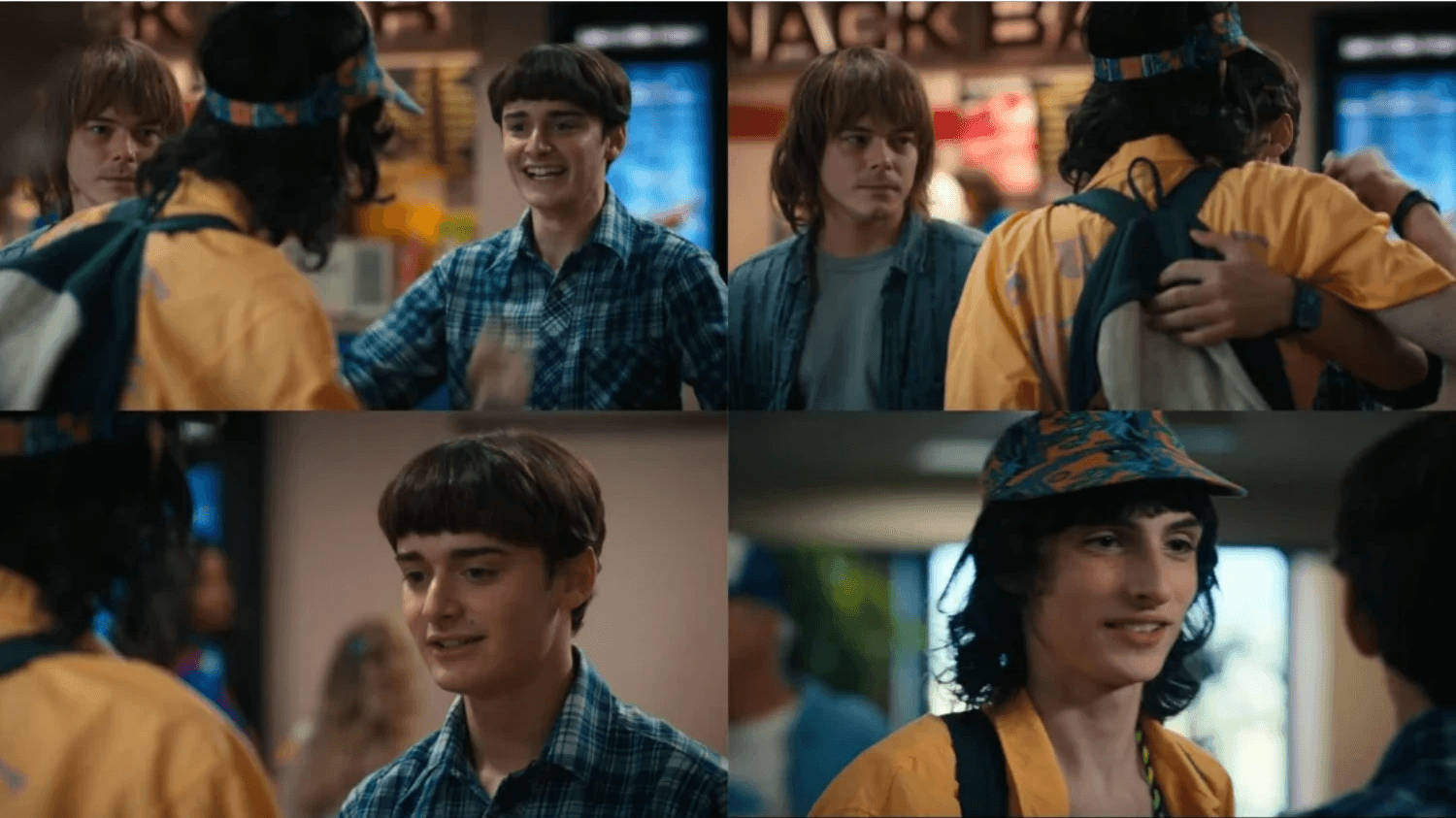
That seriousness is what makes the group’s later changes in dynamic rather interesting in theory. By Season 4, the party had nearly fractured, with El and Will moving to California, Lucas trying to belong to a different social world through basketball, and Mike and Dustin still being tied to D&D through Eddie’s “outcast” circle.
On paper, this was a strong and realistic direction for the boys’ coming-of-age arcs, as personal interests naturally diverge and popularity, shame, insecurity, and self-invention all exert new pressure. The fact that the group no longer moved as a single unit could have become one of the show’s richest developments as the boys moved closer to adulthood.
And yet something about that distance felt shallow. The problem was not simply that the friendships changed, but that the show increasingly gestured towards emotional change without doing any such interpersonal work needed to make it land.
Instead of fully showing how the group drifted and how their old patterns stopped holding, the series seemed satisfied to tell us those shifts had already happened ("off-screen," of course). It became more invested in the logistics of separation than in its texture. We could register the fact of distance, but not the slow, intimate accumulation of it. As a result, the emotional stakes felt underwritten even when the plot insisted otherwise.
Credit: @Mediocre_Kale711 in r/byler on Reddit
Mike the Brave
By way of example, in the early seasons, Mike functioned as one of the show’s strongest emotional engines, the one it repeatedly framed as the “Heart.” He was also, in many ways, Mike the Brave. He was stubborn, loving, self-righteous at times, and deeply reactive in ways that made sense for his character.
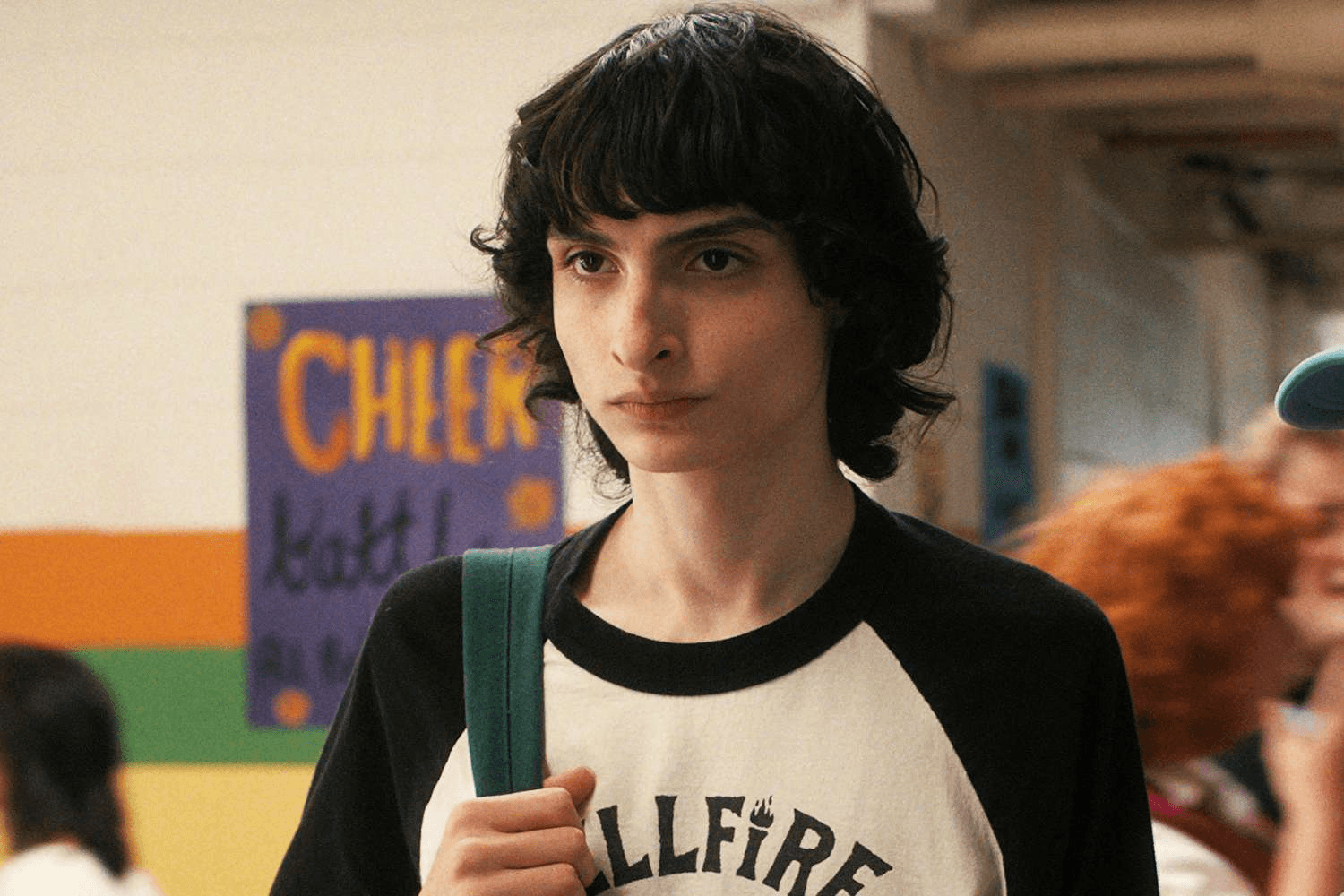
But as Stranger Things expanded, Mike began to feel less like a character with a distinct inner life and more like a vehicle for other people’s arcs. His own emotional world became flatly rendered, even though he had once been the clearest example of what adolescence truly is — embarrassing, absolutist, needy, and sincere all at once.
Mike's character flattening inevitably affected the friendship dynamics, most notably his relationship with Will. By Season 4, we could concretely identify the ways Mike had changed, as evidenced by his behavior, but the show failed to let us fully inhabit those changes. It came across as disconnected, distracted, and emotionally awkward in ways that felt underdeveloped.
Given the boys' history, Mike’s internal distance towards Will had the potential to become one of the most compelling parts of his coming-of-age arc, but the show almost entirely skipped past the emotional steps that would have made that distance feel earned. Those "off-screen" developments were too frequently broken up by plot machinery, and it lost the patience that previously led even the smallest emotional moments to feel huge.
Part of this issue was larger than Mike himself. The early seasons excelled at emotional specificity, while the later ones typically reduced characters to functions within the broader plot. Mike was technically still the “boyfriend,” the “best friend,” and the “Heart,” but those labels replaced what had once made him feel so vivid. What disappeared was the sense that Mike had a private emotional life beyond what the story needed him to do for someone else.
Credit: Netflix
Cultural Memory of Stranger Things
The show’s nostalgia worked best when it was tied to youth. What the show really sold was the memory of adolescence as a time when friendships felt sacred, and identity seemed poised between invention and exposure.
None of this means the later seasons were empty or that growing apart was a bad direction for the group. It only made sense that the beloved quartet could not remain suspended in childhood forever. But realism, by itself, is not sufficient. To make distance feel emotionally complete, a show has to treat separation as more than an event. It has to dwell in the feeling of it.
At its best, Stranger Things understood that adolescence is very much still real life, only louder. And for all the new monsters and characters the show introduced after its first season, nothing in Hawkins ever felt more convincing than a childhood friendship that felt big enough to contain the world.