There is something inherently terrifying about getting exactly what you want. This idea has powered horror stories for generations, but Curry Barker’s Obsession finds an especially nasty version of it in modern romance.
Bear wants Nikki to love him. Not eventually. Not after some grand realization. He wants the uncertainty removed altogether. So when he comes across the mysterious One Wish Willow, he makes the sort of wish that sounds romantic only if you avoid thinking about it for more than five seconds. He wishes for Nikki to love him more than anyone else in the world.
And she does.
Unfortunately for Bear, she takes the assignment very seriously.
What follows is a wonderfully uncomfortable mixture of psychological horror, grotesque escalation, romantic insecurity, and some genuinely hilarious moments. Obsession understands that horror and comedy are often separated by little more than timing. More importantly, it knows when to stop laughing.
Be Careful What You Wish For, Idiot
Bear’s mistake is easy to understand, which makes it harder to dismiss. He is lonely, insecure, and convinced that the obstacle between himself and happiness is Nikki’s inability to see him the way he sees her.
There is an entire vocabulary of romantic storytelling built around this idea. The overlooked nice guy. The friend who has secretly been the right choice all along. The person waiting patiently for someone else to finally realize what has been standing in front of them.
Obsession takes that fantasy and removes the flattering lighting.
Bear does not merely want Nikki’s affection. By making the wish, he removes her ability to decide whether he deserves it. This distinction becomes the real horror of the movie.
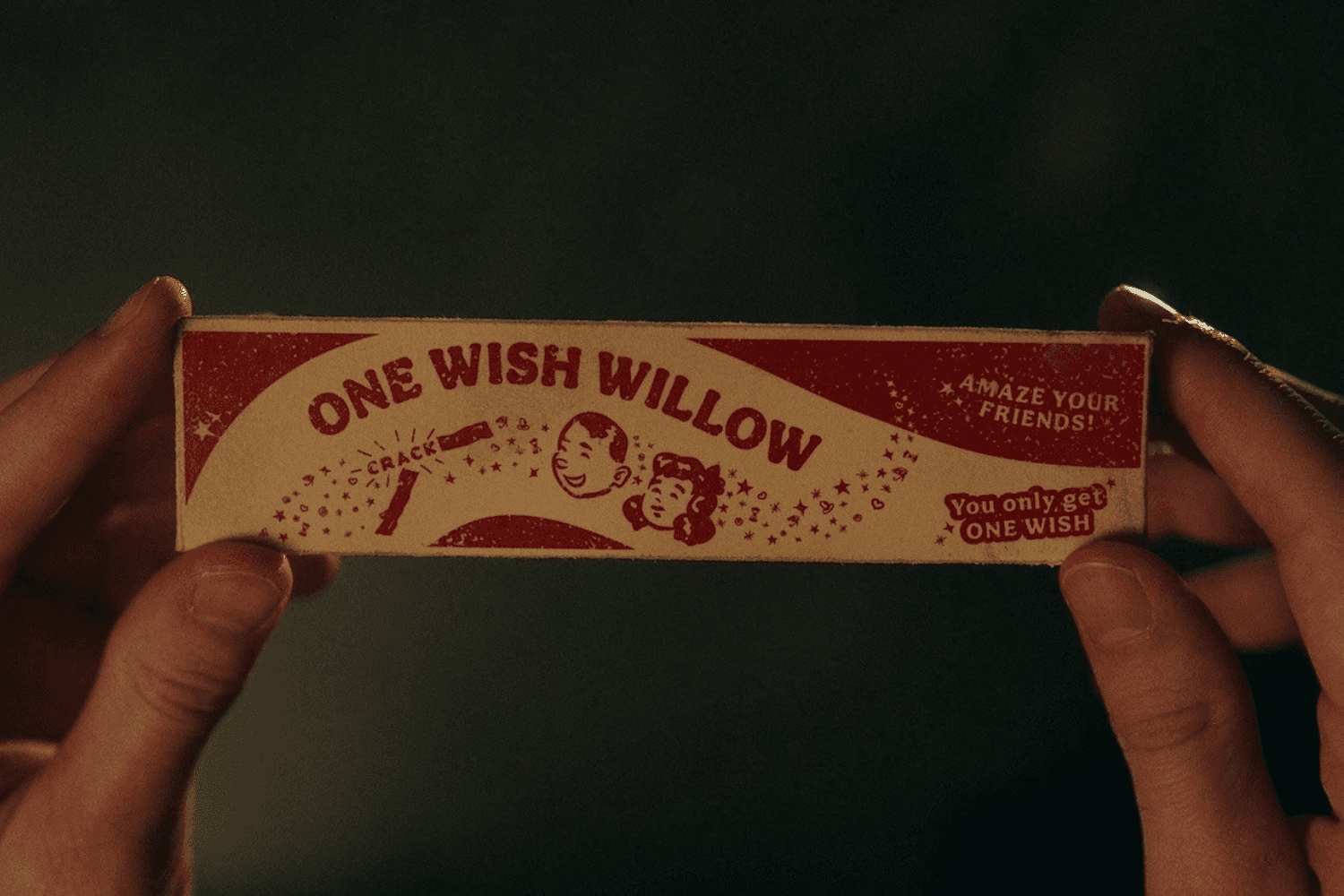
Credit: Villains Wiki - Fandom
Nikki’s transformation initially resembles wish fulfillment. She becomes affectionate, devoted, sexually interested, and intensely focused on Bear. For a brief moment, he seems to have received the exact relationship he imagined. Then the fantasy begins rotting from the inside.
Nikki's love has no boundaries because it has no freedom. She does not choose Bear over everyone else. Rather, she has effectively been rewritten around him.
One of the smartest ideas in Obsession is that this makes Nikki’s devotion horrifying even before she becomes dangerous. Something already feels wrong because love without autonomy is no longer love in any meaningful sense.
The film turns its supernatural gimmick into a surprisingly pointed examination of possession. Bear thinks he wants intimacy, but what he actually creates is ownership — which proves considerably less romantic.
Nikki as the Victim and the Monster

Credit: Medium
Horror has never been particularly shy about the obsessive woman. Movies have given us jealous girlfriends, murderous exes, deranged admirers, and women whose romantic fixation becomes increasingly violent.
Obsession appears, at first, to be playing comfortably inside that tradition. Then it makes the trope much uglier.
Nikki is terrifying, but her obsession is not hers.
Her increasingly extreme behavior becomes frightening on two levels. Bear has to survive what she is becoming, but Nikki herself has effectively been trapped inside a version of her personality created by someone else’s desire. The monster stalking Bear exists because Bear wanted to control the woman who is now stalking him.
It is an impressively vicious little circle.
Inde Navarrette’s performance is crucial here. Nikki needs to move between affection, absurdity, volatility, menace, and flashes of something recognizably human without turning into a caricature. The film’s horror depends on remembering that the person underneath all of this did not ask for it. Critics have similarly singled out Navarrette’s performance and the film’s treatment of forced devotion as central to what makes the premise work.
Somehow, This Movie Is Also Really Funny
For a movie dealing with coercion, violence, bodily horror, and the destruction of personal boundaries, Obsession is frequently hilarious.
The movie makes it work because Barker rarely treats comedy as an interruption. There are no giant neon signs announcing that the audience may now laugh. The humor grows naturally from how absurd the circumstances become, particularly when Bear is forced to deal with the increasingly deranged consequences of something he initially thought would solve his romantic problems.
Much of the comedy comes from discomfort.
A situation goes on slightly too long. Someone reacts in exactly the wrong way. Nikki’s intensity becomes so wildly disproportionate to the moment that terror briefly tips into absurdity. Bear finds himself navigating scenarios for which ordinary social etiquette is hilariously inadequate.
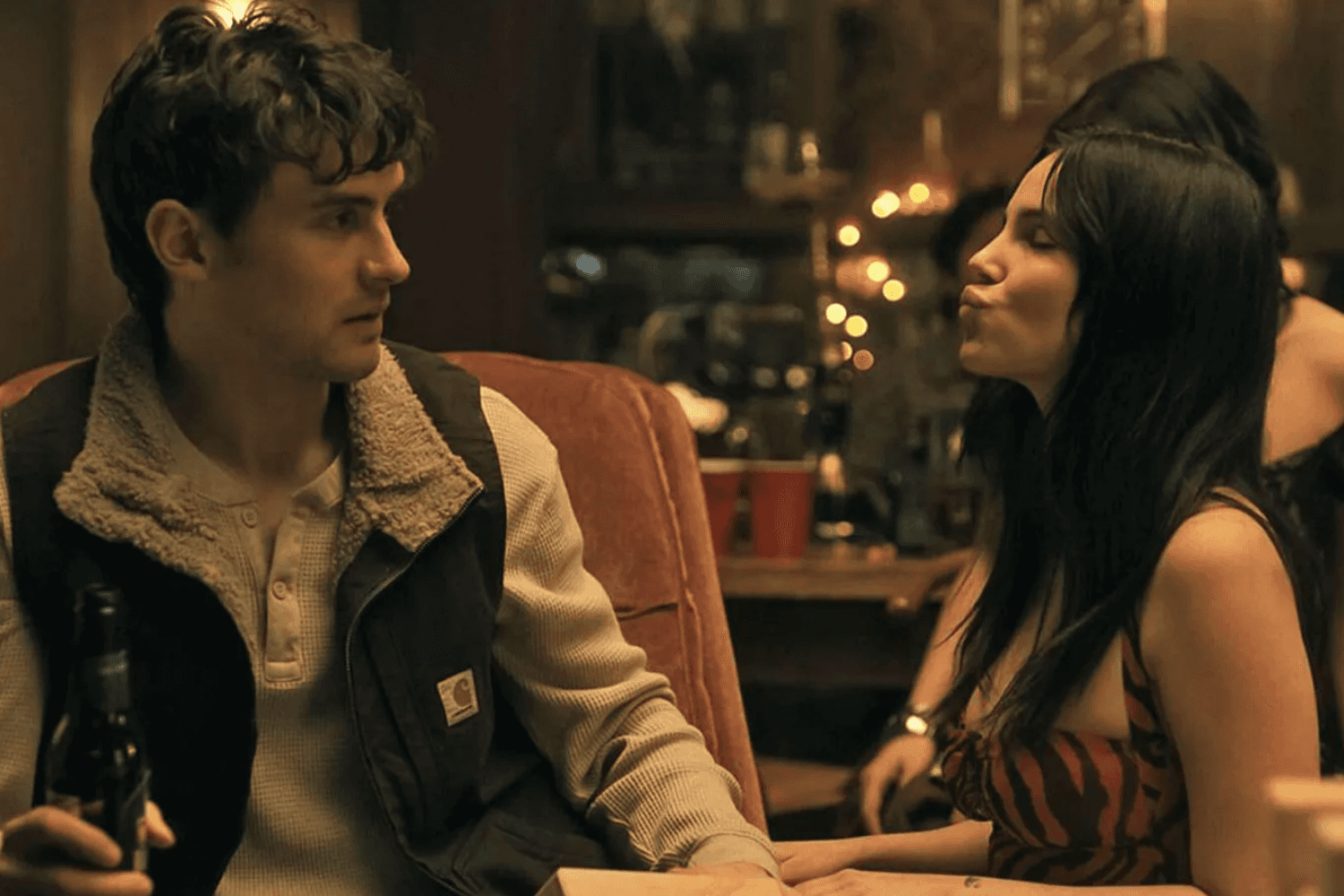
Credit: Rooftop Cinema Club
Barker lets those moments sit. He does not immediately puncture every frightening sequence with a joke. He also does not turn his characters into comedians once the movie becomes ridiculous.
Horror-comedy can become exhausting when every scare seems embarrassed by its own seriousness. Obsession largely avoids that problem. Its funniest scenes tend to remain disturbing underneath the laughter. You are laughing because the situation is insane, not because the movie has temporarily stopped being a horror film.
In the End, True Love Requires the Possibility of Rejection
For all the blood, violence, supernatural rules, and escalating madness, Obsession ultimately revolves around a remarkably simple idea: you cannot have true love without the possibility that someone might choose not to love you.
That possibility hurts. It produces embarrassment, jealousy, insecurity, loneliness, and all the other feelings Bear would rather bypass. But removing the possibility of rejection also removes the thing that makes affection meaningful in the first place: choice.
Nikki’s obsessive love becomes grotesque because it cannot change. She cannot reconsider, establish boundaries, or decide that Bear annoys her, disappoints her, scares her, or simply is not the person she wants. Her devotion is absolute, and absolute devotion, Obsession argues, is horrifying.
This gives the film a thematic sharpness that its gleefully nasty premise could easily have lacked. Bear believes the wish will give him the relationship he deserves. Instead, it reveals that a relationship stripped of another person’s autonomy is fundamentally empty, no matter how enthusiastic that person appears afterward.