In honor of the newly released Camp Rock 3, Hollywood would like to know if you remember being twelve.
Of course you do.
And at this point, it feels appropriate to ask a question that has been following movies and television for the better part of the last decade. Why does so much entertainment seem determined to take us somewhere we have already been?
Camp Rock 3
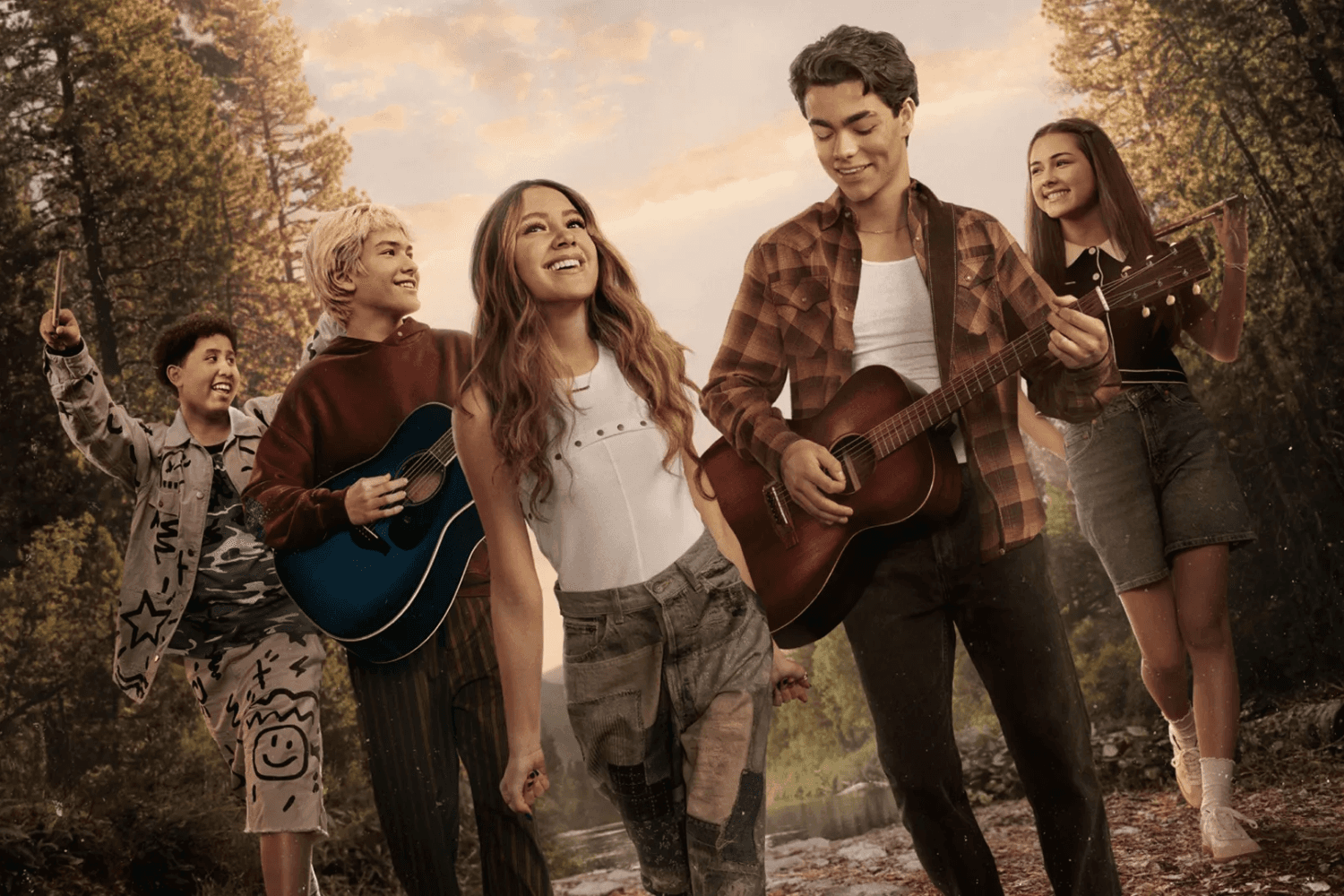
Credit: Disney Plus
Eighteen years after Camp Rock first introduced us to Mitchie Torres, Connect 3, and a summer camp where apparently everyone carried a guitar, Disney has returned to the franchise with a new generation of campers. The Jonas Brothers reprise their roles as Connect 3, while Demi Lovato returns as Mitchie in a cameo and serves as an executive producer.
Disney has been quite open about the nostalgia surrounding the project, even organizing promotional events built around throwback moments from the original films.
There is nothing particularly objectionable about any of this. In fact, for those of us who grew up during the Disney Channel and Nickelodeon era of the late 2000s and early 2010s, it is difficult not to feel at least a little curious. Camp Rock 3 does not need to explain why Camp Rock matters. We already know. That familiarity is part of the appeal.
It is also part of a much larger pattern.
Victorious 2.0

Credit: Netflix
This October, Netflix will premiere Hollywood Arts, a Victorious spinoff centered on Trina Vega, played again by Daniella Monet. The premise sends Trina back to the performing arts school as a struggling actress turned substitute teacher, surrounded by an entirely new class of students.
The original series ended in 2013, but its setting, characters, songs, and highly specific brand of Nickelodeon absurdity have remained culturally recognizable enough to support another iteration more than a decade later.
The structure is remarkably similar to Camp Rock 3. Bring back a familiar face, return to a familiar place, introduce younger characters, and hope the original audience comes along for the transition. It allows studios to create something technically new without asking viewers to begin from zero.
That model has become increasingly common because nostalgia is extraordinarily efficient.
The Nostalgia Trap
A completely original movie or television series has to establish its world, persuade audiences to care about unfamiliar characters, and compete for attention in an entertainment landscape where viewers have more choices than they could reasonably exhaust. A revival begins with an advantage. The title itself is marketing. The audience already understands the reference, remembers the aesthetic, and may have years of affection attached to it before the first trailer even arrives.
For studios, that familiarity reduces uncertainty. For viewers, it reduces effort.
The problem begins when the entertainment industry starts confusing recognition with imagination.
Nostalgia can produce a genuine emotional response because the thing being revived rarely exists only as a piece of media in our memories. Camp Rock may remind someone of summer vacation, sleepovers, Disney Channel marathons, or a childhood bedroom where the Jonas Brothers occupied more wall space than was architecturally sensible. Victorious can call back a period when Nickelodeon sitcoms, rather than streaming algorithms, dictated what a generation watched after school.
When those properties return, we are responding to more than the story in front of us. We are encountering part of our own history. This is precisely why nostalgia is such a tempting shortcut.
A filmmaker does not necessarily have to create a new emotional association when the audience arrives carrying one already. A familiar song, costume, character, or location can generate warmth immediately. Used intelligently, that history gives a sequel or revival additional depth. Used lazily, it becomes a substitute for having something new to say.
The distinction matters because not every return is inherently cynical. There are perfectly good reasons to revisit an older story: characters age; cultural attitudes change; a new generation can expose something different in a familiar premise; a sequel made years later has the opportunity to examine what time has done to people and places we once knew.
Nostalgia as a Business Model
The most successful revivals understand that nostalgia should provide context rather than content.
A weaker revival simply reconstructs the sensation of the original. It brings back the catchphrase, cues the familiar music, waits for the audience to recognize it, and treats recognition itself as a payoff. The experience can still be pleasant, but pleasure and creative necessity are not the same thing.
That is where the current wave of revivals starts to feel less like coincidence and more like an industrial strategy. Disney has already extended That’s So Raven through Raven’s Home and Wizards of Waverly Place through Wizards Beyond Waverly Place. Nickelodeon revived iCarly. Now Victorious is being extended through Hollywood Arts. Meanwhile, theatrical filmmaking continues returning to established franchises, sequels, remakes, and legacy properties because audiences already know what those names promise.
Even the language surrounding these projects has become revealing. Studios increasingly favor terms such as “new chapter” or “companion piece” over words like “reboot,” which have accumulated their own baggage. The industry wants the commercial advantages of familiarity without making the audience feel as though it is being sold the same thing again.
To some extent, audiences are complicit. Many of us complain about the lack of originality and then immediately watch the trailer for whatever childhood property has just been resurrected. This is not necessarily hypocrisy. Nostalgia offers something original entertainment cannot manufacture on demand, which is history. There is comfort in knowing the rules of a world before entering it, especially when contemporary media consumption can feel endless and fragmented.
There may also be something more personal behind our appetite for these returns. Sometimes we do not actually miss Camp Rock. We miss being the age we were when Camp Rock mattered to us.
That distinction is easy to overlook, but it explains much of nostalgia's power. Rewatching or revisiting a childhood franchise can briefly collapse the distance between who we were and who we have become. The movie is familiar, but so is the version of ourselves attached to it.
Studios are not wrong to recognize that emotional value. The concern is what happens when an industry becomes too dependent on it.
We Still Need Something New to Miss Someday
Every franchise we are nostalgic for was once unfamiliar.
There was a moment when nobody knew what Camp Rock was. Nobody had met Tori Vega, Jade West, or Trina. These shows became generational touchstones because someone first created them without the guarantee of an existing audience waiting on the other side.
That is the contradiction at the center of this issue. Entertainment companies continue mining old properties because audiences formed such strong attachments to them, while becoming increasingly cautious about investing in the kinds of original ideas that might inspire the same attachment in the future.
If everything is built from memory, eventually there is less new material to remember.
Camp Rock 3 does not need to carry the entire burden of Hollywood's originality problem, nor does Hollywood Arts. Both may turn out to be entertaining, thoughtful continuations that use familiar worlds to introduce something worthwhile. There is no rule that says we should stop enjoying the characters and stories we grew up with simply because we have grown older.
But there should still be room for surprise.
Nostalgia is most satisfying when it reminds us of the wonder we once felt. It becomes limiting when it replaces the possibility of feeling that wonder again.
So yes, return to Camp Rock. Walk through the halls of Hollywood Arts one more time. Let the old songs play.
Then, for the love of all things original, raw, and less-autotuned, give us somewhere we have never been.